What is Social Anxiety?
Social anxiety is more than just shyness. It involves intense fear of social situations where you might be judged, embarrassed, or humiliated. This can significantly impact relationships, work, and daily activities.
Why Self-Assess?
Self-assessment helps you understand your social anxiety better. Recognizing symptoms early allows you to take proactive steps toward managing them and improving your social confidence.
Your Privacy Matters
Your responses are completely confidential and securely stored. Track your progress over time and share results with your care provider when you choose to.
About the Social Interaction Anxiety Scale
The SIAS is a clinically validated screening tool used by mental health providers worldwide to assess social interaction anxiety.
What the Test Measures
Difficulty making eye contact with others
Nervousness when speaking with authority figures
Discomfort mixing socially or in groups
Worry about saying something embarrassing
Tension when talking about yourself or feelings
Understanding Your Score & Recommended Support
0-20
Minimal Anxiety
CARA Recommended
21-34
Mild Anxiety
CARA Recommended
35-48
Moderate Anxiety
CARA + Personalized Care
49-80
Severe Anxiety
Provider Support
Introducing CARA - Your AI Wellness Companion
CARA (Culturally Aware Roadmap for All) is perfect for those with minimal to moderate social anxiety. CARA creates personalized weekly wellness roadmaps based on your unique cultural background, personal preferences, and wellness goals. It provides daily support with culturally-informed practices that help build social confidence naturally.
For moderate to severe social anxiety, CARA works alongside provider support to reinforce your wellness progress with personalized daily wellness activities and gradual exposure exercises.
A Guide to Social Anxiety
Understanding Social Anxiety: More Than Just Shyness
The difference between shyness and social anxiety disorder, what keeps it going, and paths to greater social confidence.
What Is Social Anxiety Disorder?
Social Anxiety Disorder (SAD), also called social phobia, is an intense, persistent fear of being judged, embarrassed, or humiliated in social situations. This fear significantly interferes with daily life, relationships, work, and personal goals.
It can be triggered by everyday activities like eating in public, speaking in meetings, or making small talk, and is often accompanied by physical symptoms like rapid heartbeat, sweating, and trembling. It affects approximately 12% of adults, typically beginning before age 20, and without treatment can become chronic.
Social Anxiety vs. Shyness: Key Differences
Normal Shyness
Temporary discomfort in new situations
Doesn't significantly limit life choices
Decreases as you warm up to people
Manageable without provider help
Social Anxiety Disorder
Intense, persistent fear lasting 6+ months
Significantly interferes with work, school, relationships
Causes avoidance of important situations
Benefits from provider treatment
Common Social Anxiety Triggers and Situations
Social anxiety can be triggered by a wide range of situations. Knowing your specific triggers is the first step toward managing them.
Performance Situations
Public speaking, presentations, performing on stage, job interviews, being the center of attention
Social Interactions
Meeting new people, small talk, dating, parties, group conversations, phone calls
Being Observed
Eating or drinking in public, writing while others watch, using public restrooms, working out at gym
Authority Figures
Talking to bosses, teachers, doctors, police officers, or anyone perceived as having power
The Cognitive-Behavioral Model: Why Social Anxiety Persists
Social anxiety is maintained by a cycle of negative thoughts, physical symptoms, and avoidance behaviors. Understanding this cycle is key to breaking free.
🧠
Negative Thoughts
"Everyone will think I'm stupid." "They're judging me." These thoughts trigger anxiety before and during social situations.
💓
Physical Symptoms
Rapid heartbeat, sweating, blushing, trembling, nausea, difficulty speaking. These symptoms reinforce the belief that something is wrong.
🚫
Avoidance Behaviors
Avoiding social situations provides temporary relief but strengthens the anxiety long-term, preventing you from learning that situations are safe.
Evidence-Based Treatments: What Actually Works
Social anxiety disorder is highly treatable. Research shows several supportive approaches are particularly effective.
Cognitive Behavioral Approach (CBT)
The gold standard approach for social anxiety. CBT helps you challenge negative thought patterns and gradually face feared situations through guided exposure.
Success rate: 75-80% with 12-16 sessions
Guided Exposure
A core component of CBT where you gradually face feared social situations in a controlled, supportive way. This helps your brain learn that social situations are not as dangerous as they seem.
Most effective when combined with cognitive restructuring
Acceptance and Commitment Approach (ACT)
Focuses on accepting anxious thoughts and feelings rather than fighting them, while committing to actions aligned with your values.
Emerging evidence shows comparable effectiveness to CBT
Social Skills Training
Teaches practical communication skills like making eye contact, starting conversations, and reading social cues.
Often combined with CBT for comprehensive treatment
Practical Strategies to Build Social Confidence
Provider treatment is most effective, but these evidence-based strategies can help you start building social confidence today.
Challenge negative predictions: Write down what you fear will happen, then what actually happens
Start small: Practice with low-stakes situations like greeting a cashier or asking for directions
Focus outward: Pay attention to others and the conversation, not your anxiety symptoms
Practice mindfulness: Observe anxious thoughts without judgment, letting them pass like clouds
Use breathing techniques: Slow, deep breathing activates your body's relaxation response
Celebrate small wins: Acknowledge every step forward, no matter how small
Limit safety behaviors: Gradually reduce crutches like excessive preparation or alcohol use
Join support groups: Connect with others who understand your experience
Related Mental Health Resources
Social anxiety often co-occurs with other conditions. Explore our other resources for comprehensive support.
Why Create a Free Account?
Get the most out of your mental health journey with these exclusive benefits
Personalized Recommendations
Based on your results, receive tailored recommendations and resources to help you manage social anxiety and build confidence in social situations.
Access to Providers
For moderate to severe social anxiety, connect with licensed providers who specialize in CBT and guided exposure for social anxiety support.
Multiple Assessments
Access a variety of mental health assessments including generalized anxiety, depression, stress, PTSD, and more to get a complete picture of your wellbeing.
0+
Languages spoken by our providers
0%
Of clients feel culturally understood
$0
Per session — cancel anytime
0h
Average time to first session
How It Works?Start your journey in three simple steps.
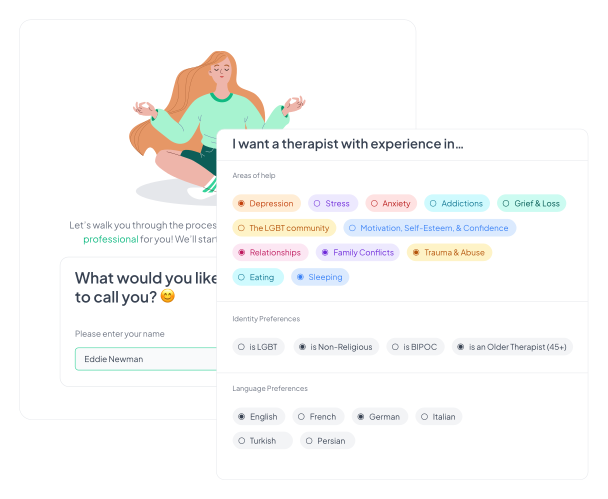
Create Your Free Account
Sign up in less than a minute. Your information is secure and confidential. Once registered, you can access all our mental health assessments from your personal dashboard.
Take the Social Anxiety Assessment
Complete the SIAS assessment in about 8-10 minutes. Answer honestly about how you typically feel in social situations to get accurate results and personalized recommendations.
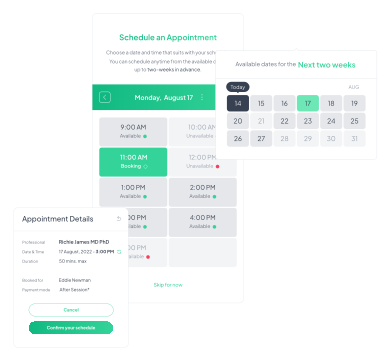
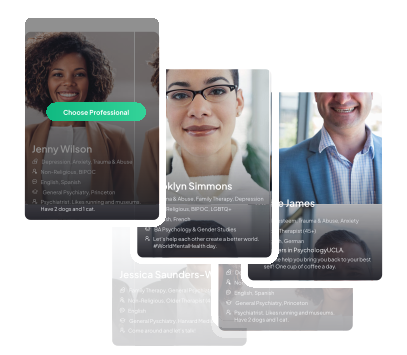
Get Support If Needed
Based on your results, connect with licensed providers who specialize in social anxiety support using CBT and guided exposure. Schedule appointments easily through your dashboard.
Ready to understand your social anxiety better?
Join thousands of others who have taken the first step towards better social confidence. Create your free account today and take the social anxiety assessment in just 8-10 minutes.
Sign Up FreeReady to understand your social anxiety better?
Join thousands of others who have taken the first step towards better social confidence. Create your free account today and take the social anxiety assessment in just 8-10 minutes.
Sign Up FreeExplore Further
Want support navigating your social needs?
Visit our Social Needs hub for resources on building confidence and connection.
Frequently asked questions
These answers offer a starting point for understanding social anxiety assessments. For more detailed advice tailored to your individual circumstances, please consult with a wellness provider by making an appointment with one of our providers.

© 2026 MeTime Healing. All rights reserved.