Welcome to MeTime Healing: Navigating Digital Well-being
Enhancing Your Digital Well Being for Balanced Mental Health
Digital well being is not about abandoning technology, it is about building healthier habits that protect focus, emotions, and overall mental health. At MeTime Healing, individuals learn how digital behaviors affect emotional well being, how to set mindful boundaries, and how to develop healthier relationships with technology that support balance and psychological resilience.
How Mindful Digital Habits Can Improve Your Daily Life
Mindful digital habits help individuals regain control over attention, time, and emotional energy. Through supportive guidance and evidence based strategies, MeTime Healing supports healthier screen use, reduced anxiety related to social media, and improved emotional clarity in an increasingly digital world.
4.9
Avarage Rating
Welcome to MeTime Healing, your space for beginning your journey to sleep and mental well-being. At MeTime Healing, we recognize the profound connection between the quantity of sleep, the quality of sleep and mental well-being. With a personalized and comprehensive approach, we are strongly committed to our mission of providing the knowledge, support, and mental health resources that will elevate your sleep hygiene and positively impact your well-being.
Why Choose MeTime Healing for Better Digital Well-being?
In our increasingly digitalized society, while we enjoy numerous benefits, we also face significant challenges. The pervasive connectivity offered by phones and social media can profoundly affect our mental health. It’s essential to understand and effectively manage this relationship to ensure a healthy and balanced lifestyle. At MeTime, we specialize in addressing issues related to excessive reliance on social media, coping with FOMO (Fear Of Missing Out), and mitigating the mental health effects of phone addiction.

Our Approach to Digital-Well-being

24/7 Support for Your Digital Life

Proven Results in Improving Digital Health
Understanding Digital Addiction and FOMO in the Modern Age
Explore the psychology of digital addiction, learn to recognize unhealthy patterns, and discover practical strategies for achieving digital balance.
What Is Digital Addiction?
Digital addiction, also called internet addiction or smartphone addiction, refers to compulsive, excessive use of digital devices and online platforms that interferes with daily life, relationships, work, and mental health. Unlike substance addictions, digital addiction is a behavioral addiction characterized by loss of control, withdrawal symptoms, and continued use despite negative consequences.
The average American spends over 7 hours per day on screens, not including work-related use. For many, this constant connectivity has become problematic. Digital addiction activates the same reward pathways in the brain as gambling, drugs, and alcohol. Each notification, like, or new message triggers a dopamine release, creating a cycle of craving and temporary satisfaction that keeps us coming back for more.
Research shows that excessive digital device use is linked to increased rates of anxiety, depression, sleep disorders, attention problems, and social isolation. The blue light from screens disrupts circadian rhythms, while constant multitasking fragments attention and reduces productivity. Perhaps most concerning, heavy social media use is associated with decreased life satisfaction and increased feelings of loneliness.
Signs You May Have a Digital Addiction
🔴 Loss of Control
You intend to check your phone for 5 minutes but find yourself scrolling for an hour. You can't resist checking notifications even during important activities like meals, conversations, or work.
⚠️ Withdrawal Symptoms
You feel anxious, irritable, or restless when you can't access your devices. The thought of being without your phone causes significant distress (nomophobia - fear of being without your mobile phone).
⏰ Time Distortion
You consistently underestimate how much time you spend online. Hours pass without you realizing it. You neglect responsibilities, hobbies, or sleep because of screen time.
💔 Relationship Impact
Others complain about your device use. You choose screen time over face-to-face interactions. You feel more connected to online friends than real-life relationships.
Understanding FOMO: The Fear of Missing Out
FOMO is the pervasive anxiety that others are having rewarding experiences without you. Social media amplifies FOMO by providing a constant stream of curated highlights from others' lives, creating the illusion that everyone else is living more exciting, fulfilling lives. This drives compulsive checking and comparison, fueling a cycle of dissatisfaction and anxiety.
The Comparison Trap
Social media shows everyone's highlight reel, not their behind-the-scenes struggles. Constant comparison to others' curated lives leads to feelings of inadequacy and decreased self-esteem.
The Scarcity Mindset
FOMO creates a sense that opportunities are scarce and fleeting. This drives impulsive decisions, overcommitment, and difficulty being present in the moment.
The Validation Cycle
Posting experiences to prove you're not missing out becomes more important than actually enjoying them. Life becomes performative rather than authentic.
The Neuroscience of Digital Addiction
Understanding why digital devices are so addictive helps explain why willpower alone often isn't enough to break the cycle:
Variable Reward Schedule
Apps use the same psychological principle as slot machines. You never know when you'll get an interesting notification, like, or message, so you keep checking. This unpredictability is more addictive than consistent rewards.
Infinite Scroll
Social media feeds never end, removing natural stopping points. Your brain never gets the satisfaction of completion, so you keep scrolling, always seeking that next dopamine hit.
Social Validation
Likes, comments, and shares trigger dopamine release in the brain's reward center. This social validation becomes addictive, driving us to post more and check constantly for responses.
Attention Hijacking
Tech companies employ teams of psychologists and designers to make apps as engaging as possible. Features like autoplay, push notifications, and red badges are specifically designed to capture and hold your attention.
Practical Strategies for Digital Detox and Balance
Achieving digital wellness doesn't mean abandoning technology—it means using it intentionally and maintaining healthy boundaries:
Set Specific Tech-Free Times
Designate the first hour after waking and last hour before bed as phone-free. No devices during meals or family time.
Create Physical Boundaries
Charge your phone outside the bedroom. Use a traditional alarm clock. Keep devices out of sight during focused work.
Turn Off Non-Essential Notifications
Disable all but critical notifications. Use Do Not Disturb mode liberally. Check apps on your schedule, not theirs.
Use Grayscale Mode
Remove color from your phone screen. This makes apps less visually stimulating and reduces compulsive checking.
Replace Digital Habits
When you feel the urge to check your phone, do something else: stretch, take deep breaths, look out a window.
Practice Mindful Usage
Before opening an app, ask: Why am I doing this? What do I hope to gain? Set a timer for intentional browsing.
Cultivate Offline Hobbies
Rediscover activities that don't involve screens: reading physical books, outdoor activities, creative pursuits, face-to-face socializing.
Use App Limiters
Set daily time limits for social media apps. Use tools like Screen Time (iOS) or Digital Wellbeing (Android).
Related Mental Health Resources
Digital addiction often co-occurs with anxiety and stress. Explore our other resources for comprehensive support:
0+
Languages spoken by our providers
0%
Of clients feel culturally understood
$0
Per session — cancel anytime
0h
Average time to first session
How It Works?Start your journey in three simple steps.
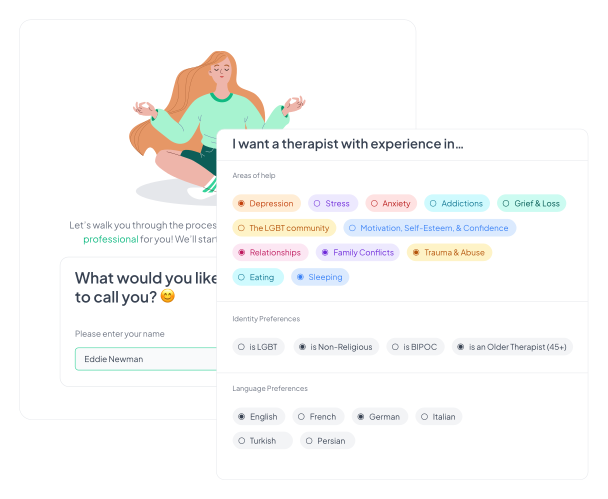
How does the pairing to the best Care Provider work?
Answer a few questions to find a compassionate Care Provider who fits your needs and preferences. Tap into a large network of licensed mental health provider by using our unique algorithm. We will find the best provider for you.
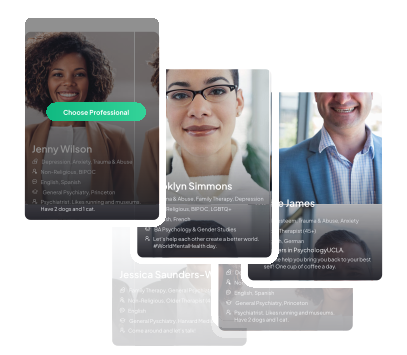
Choose your Care Provider
MeTime will present you with 5 of the best chosen providers based on your preferences. Choose any or all of the five and set an appointment.
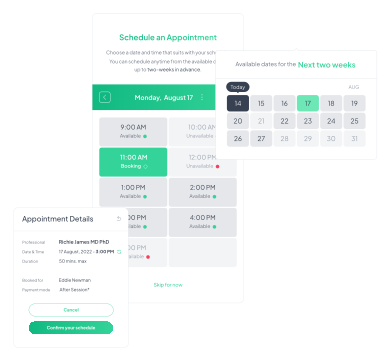
Setting an Appointment
Although setting an appointment right after signing up is not required, it is highly encouraged to do so. Don’t worry, scheduling an appointment is only a few clicks away with our intuitive scheduling calendar. You can schedule appointments 2-weeks in advance giving you time to prepare for the meeting.
Ready to Embrace a Healthier Digital Life?
<p>Start your journey with MeTime Healing today. Our experts are committed to guiding you towards a healthier, more balanced digital experience, enhancing your overall mental well-being.</p>
Get StartedReady to Embrace a Healthier Digital Life?
<p>Start your journey with MeTime Healing today. Our experts are committed to guiding you towards a healthier, more balanced digital experience, enhancing your overall mental well-being.</p>
Get StartedFrequently asked questions
These questions and answers address the key aspects of digital addiction and FOMO, highlighting their impact, management, and the importance of healthy digital habits. In order to manage and find better coping skills with FOMO and digital addiction, consult with a counselor or a life coach from the list of our providers here at MeTime Healing.


© 2026 MeTime Healing. All rights reserved.