Exclusive Offer: Enjoy Free CARA
Traumatic Grief Inventory (TGI)
Take all 22 items free, right here on this page, and get your score straight away — no account needed. Below the inventory: what the items are asking, how the 22-110 score is worked out, and what the result does and does not tell you.
22 Items
10-15 Minutes
Instant Score
No Sign-Up
What It Measures
The intensity and persistence of grief reactions over the past month — yearning, disbelief, intrusive images, avoidance, anger, numbness, and the effect all of it is having on your day-to-day functioning.
How It Is Scored
Every item is rated 1 (Never) to 5 (Always) and the ratings are added together, giving a total between 22 and 110. Nothing is reverse-scored, so a higher total always means a heavier grief burden.
Your Privacy Matters
Nothing you enter here is sent to us or saved anywhere — the inventory runs and scores entirely in your own browser. Close the page and it is gone.
Take the Traumatic Grief Inventory
Twenty-two questions, one at a time. For each, choose how often you have had that experience in the past month, thinking of the person who died. Your score appears at the end — nothing is sent anywhere, and you can go back and change any answer.
Traumatic Grief Inventory
1 / 22Progress
0%
I had intrusive thoughts or images related to the person who died.
Never
Rarely
Sometimes
Frequently
Always
There are no right answers, and you can go back and change any of them.
What Those 22 Items Are Measuring
The items are not a random list. They cluster into areas of experience that, taken together, describe what it looks like when grief stops easing on its own.
Separation Distress
Longing and yearning for the person, intense pangs of sorrow, and the sense that a part of you died along with them.
Disbelief & Non-Acceptance
Feeling stunned, shocked or dazed; the death still feeling unreal; trouble accepting that it really happened.
Intrusion
Unwanted thoughts and images of the person — and, separately, of the circumstances of the death itself. This is the traumatic edge the inventory is named for.
Avoidance
Steering clear of places, objects, people or thoughts that would confirm the loss, and difficulty looking back on happy memories.
Identity & Meaning
Confusion about your role in life, a diminished sense of who you are, and life feeling unfulfilling or meaningless without them.
Anger, Blame & Guilt
Bitterness about the death, intense blame directed at others, difficulty trusting people, and self-blaming thoughts about the loss.
Numbness & Detachment
Emotional flatness, trouble feeling anything positive, and feeling alone or cut off from other people.
Functional Impact
A measurable drop in how you manage work, relationships and home life, and difficulty moving forward into anything new.
One Safety Item
One item asks directly about wanting to die in order to be with the person who died. If that is true for you, please use the crisis numbers below now.
How the TGI Score Is Calculated
You rate each of the 22 items for how often you have had that experience in the past month: Never (1), Rarely (2), Sometimes (3), Frequently (4) or Always (5). The 22 ratings are summed. The lowest possible total is 22 — answering Never to everything — and the highest is 110.
Because no item is reverse-worded, there is nothing to flip before adding up, and the total moves in one direction only: the higher it climbs, the more of these experiences you are living with, and the more often.
22 items
Rated for the past month
1 to 5 each
Never through to Always
22-110 total
Higher means more severe
Interpreting Your Total Score
These are the four bands MeTime Healing reports, and what we suggest at each one.
22-44
Minimal
Grief is present but appears to be moving. Self-guided support and CARA are usually enough.
45-66
Mild
Noticeable symptoms on most days. Worth watching over the next few months and retaking to see the direction of travel.
67-88
Moderate
Grief is shaping daily life. We suggest speaking with a provider who works specifically with grief and bereavement.
89-110
Severe
A heavy, persistent grief burden. Professional support is strongly recommended — you should not have to carry this alone.
Reading Your Score Well
A number is only useful if you know what it can and cannot carry.
What it can tell you
How heavy this past month has been, in one comparable number
Which parts of grief are loudest for you right now
Whether things are easing, when you retake it later
A concrete starting point for a first conversation with a provider
What it cannot tell you
Whether you meet criteria for prolonged grief disorder — only a clinician can say
Whether your grief is "too much" — there is no correct amount
How your score compares with someone else's loss
Anything about depression, PTSD or other conditions grief can sit alongside
When to Take It, and When to Take It Again
Severe grief in the first weeks after a death is not a disorder — it is what loss feels like. What the inventory is built to notice is grief that has not begun to loosen its grip with time, which is why clinicians pay particular attention to scores that are still high at six to twelve months.
Because every item is anchored to the past month, the inventory works well as a repeated measure. Taking it every month or two turns an experience that feels formless into something with a shape you can see — and a slow decline in the total is often the first evidence of progress people are willing to believe.
Anniversaries, birthdays and holidays can push a score up temporarily. One higher month after a hard date is not a setback; a total that keeps climbing over several months is worth raising with a provider.
The TGI Alongside Other Grief Measures
Several validated grief questionnaires exist. They overlap heavily, and their scores are not interchangeable — compare a score only with itself over time.
Traumatic Grief Inventory (TGI)
22 items, past month, 22-110. Gives equal room to the traumatic side of a death — intrusive images of the circumstances, avoidance of reminders — as well as to yearning and disbelief. This is the inventory MeTime Healing uses.
Inventory of Complicated Grief (ICG)
A 19-item measure published by Prigerson and colleagues in 1995, and still one of the most widely cited grief scales in the research literature. Focused on complicated grief symptoms rather than trauma features.
Brief Grief Questionnaire (BGQ)
A 5-item screener designed to be quick enough for a primary care visit. Useful for flagging who might need a fuller assessment, not for measuring severity in any detail.
If you are in crisis, do not wait for a score
Wanting to join the person you lost is something many grieving people feel, and it deserves immediate support. Call or text 988 for the Suicide and Crisis Lifeline, text HOME to 741741 for the Crisis Text Line, or call 911 in an emergency. Help is available 24 hours a day.
What Happens After You Get Your Score
CARA (Culturally Aware Roadmap for All) turns your TGI result into a weekly roadmap rather than leaving you with a number. Mourning practices differ enormously between cultures and families, so CARA builds around your own background, beliefs and pace.
In the minimal and mild bands CARA can stand on its own. In the moderate and severe bands it works alongside a licensed grief provider, holding the everyday practice between sessions.
Related Resources
Grief rarely arrives on its own — these pages cover what often comes with it.
What a Free Account Adds
The inventory above is free either way — an account is for what comes after it
A CARA Roadmap
Weekly wellness steps built around your cultural background, your values and your pace, rather than a generic grief checklist.
Grief-Trained Providers
If your score sits in the moderate or severe band, connect with licensed providers who work specifically with grief and bereavement.
Everything Else
GAD-7, PHQ-9, PTSD, DASS-21 and the rest of the assessment library, so grief is not the only part of the picture you can see.
0+
Languages spoken by our providers
0%
Of clients feel culturally understood
$0
Per session — cancel anytime
0h
Average time to first session
How It Works?Three steps, at whatever pace suits you.
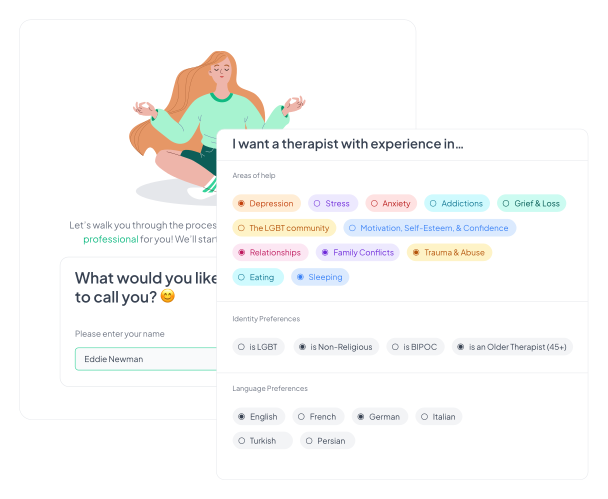
Complete the 22 Items
Answer each item on this page for how often you have had that experience in the past month. It takes 10-15 minutes, there is no time limit, and no account is needed to start.

Read Your Score
Your total out of 110 appears as soon as you finish, with the band it falls into and a plain reading of what that suggests — including crisis resources if any of your answers call for them.
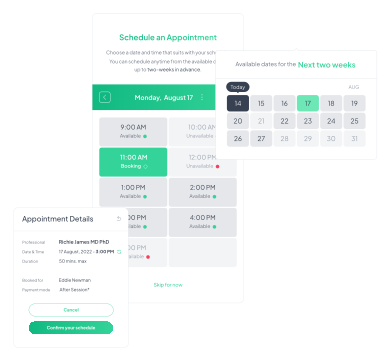
Decide What Comes Next
Nothing is stored, so note your score down if you want it. Then decide what is useful: a CARA roadmap, a session with a provider who works specifically with grief and bereavement, or simply closing the page. The choice is yours.
Put a shape around what you are carrying
The Traumatic Grief Inventory takes 10-15 minutes, costs nothing and needs no account. Scroll back up whenever you feel ready.
Sign Up FreePut a shape around what you are carrying
The Traumatic Grief Inventory takes 10-15 minutes, costs nothing and needs no account. Scroll back up whenever you feel ready.
Sign Up FreeFrequently asked questions
This page explains how the Traumatic Grief Inventory works and is not a diagnosis. For advice tailored to your own loss and circumstances, please speak with a wellness provider by making an appointment with one of our providers.


© 2026 MeTime Healing. All rights reserved.