Grief Assessment Test
Take our clinically validated Traumatic Grief Inventory to understand your grief symptoms after losing a loved one. Sign up for free to get instant results, personalized recommendations, and access to grief counseling support.
Clinically Validated
10-15 Minutes
Instant Results
What is Traumatic Grief?
Traumatic grief occurs when a loved one dies suddenly or in traumatic circumstances. It combines the pain of loss with trauma symptoms, making the grieving process more intense and challenging to navigate alone.
Why Self-Assess?
Self-assessment helps you understand your grief experience. Recognizing when grief becomes overwhelming allows you to seek the right support and begin your healing journey.
Your Privacy Matters
Your responses are completely confidential and securely stored. Track your healing progress over time and share results with your care provider when you choose to.
About the Traumatic Grief Inventory
The TGI is a clinically validated screening tool used by mental health providers to assess the severity of grief reactions following the loss of a loved one.
What the Test Measures
Intrusive thoughts and images related to the loss
Intense emotional pain, sadness, and yearning
Difficulty accepting the loss and moving forward
Avoidance of reminders and emotional numbness
Impact on social, occupational, and daily functioning
Understanding Your Score & Recommended Support
22-44
Minimal Grief
CARA Recommended
45-66
Mild Grief
CARA + Support Group
67-88
Moderate Grief
Grief Counseling
89-110
Severe Grief
Provider Support
Introducing CARA - Your AI Wellness Companion
CARA (Culturally Aware Roadmap for All) provides compassionate support for those experiencing grief. CARA creates personalized weekly wellness roadmaps that honor your cultural traditions around mourning and loss, while providing daily self-care activities, mindfulness practices, and gentle guidance through your healing journey.
For moderate to severe grief, CARA works alongside provider grief counseling to reinforce your wellness progress with culturally-informed daily support and meaningful rituals to honor your loved one.
Crisis Support Available 24/7
If you are experiencing thoughts about wanting to die to be with your loved one, please reach out for immediate support:
National Suicide Prevention Lifeline
988 or 1-800-273-8255
Crisis Text Line
Text HOME to 741741
Emergency Services
911
💜 Understanding Your Grief Journey
Grief is a deeply personal experience, and there is no right or wrong way to grieve. Traumatic grief can be particularly challenging because it combines the pain of loss with trauma symptoms. Common experiences include:
Intense longing and yearning for your loved one
Difficulty accepting the reality of the loss
Feeling that life is meaningless without them
Avoiding reminders of your loved one
Healing is possible with the right support. You don't have to navigate this alone.
A Guide to Grief and Loss
Understanding Grief and Loss
The grieving process, what makes grief traumatic, and paths to healing.
What Is Traumatic Grief?
Traumatic grief — also called complicated grief — happens when a loss is so sudden or violent that normal mourning gets stuck. Instead of gradually easing, the pain stays intense for 12+ months and disrupts daily life.
It affects about 7–10% of bereaved people, more often after sudden or violent deaths. Common signs include intrusive thoughts, intense yearning, and difficulty accepting the loss or moving forward.
Normal Grief vs. Traumatic Grief
Normal Grief
Comes in waves — good days and bad days
Gradually eases in intensity over time
Allows for positive memories and acceptance
Ability to re-engage with life returns
Traumatic Grief
Persistent, intense pain that doesn't ease
Difficulty accepting the loss after 12+ months
Intrusive thoughts and trauma symptoms
Significant impairment in daily life
The Five Stages of Grief
A framework, not a timeline. Stages can arrive in any order, repeat, or be skipped entirely — there's no single "correct" way to grieve.
1️⃣
Denial
A protective shock response
2️⃣
Anger
Frustration at the unfairness
3️⃣
Bargaining
Searching for meaning
4️⃣
Depression
The weight of loss sets in
5️⃣
Acceptance
Finding a new normal
Evidence-Based Approaches
Traumatic grief responds well to specialized, trauma-informed support.
Complicated Grief Treatment (CGT)
Reduces avoidance and helps you reconnect with life — about 70% of participants improve significantly.
Trauma-Focused CBT
Addresses grief and trauma together through cognitive restructuring and healthy coping strategies.
EMDR for Grief
Processes traumatic memories of the loss, softening painful ones while preserving positive ones.
Meaning Reconstruction
Helps rebuild identity and purpose — especially useful for existential questions raised by loss.
Cultural Perspectives on Grief
Grief is universal, but how it's expressed varies widely — and every approach is valid.
Mourning Rituals
Some traditions encourage open expression of grief; others value quiet composure.
Community Support
Many cultures grieve collectively — understanding your context helps us support you better.
Continuing Bonds
Ongoing remembrance practices are a healthy part of grief for many people.
Self-Care During Grief
Provider support matters most for traumatic grief — these habits can complement it.
Keep a regular sleep schedule
Eat nourishing meals, even without appetite
Move gently — a daily walk helps
Journal your thoughts and feelings
Lean on supportive friends and family
Join a grief support group
Create rituals to honor your loved one
Be patient and compassionate with yourself
Related Mental Health Resources
Grief often overlaps with other challenges — explore more of our free assessments.
Why Create a Free Account?
Get the support you need during this difficult time with these exclusive benefits
Personalized Recommendations
Based on your results, receive tailored recommendations and resources to help you navigate your grief journey and find healing.
Access to Grief Counselors
Connect with licensed providers who specialize in grief and bereavement counseling to help you process your loss in a healthy way.
Multiple Assessments
Access a variety of mental health assessments including depression, anxiety, PTSD, and more to get a complete picture of your wellbeing.
0+
Languages spoken by our providers
0%
Of clients feel culturally understood
$0
Per session — cancel anytime
0h
Average time to first session
How It Works?Start your healing journey in three simple steps.
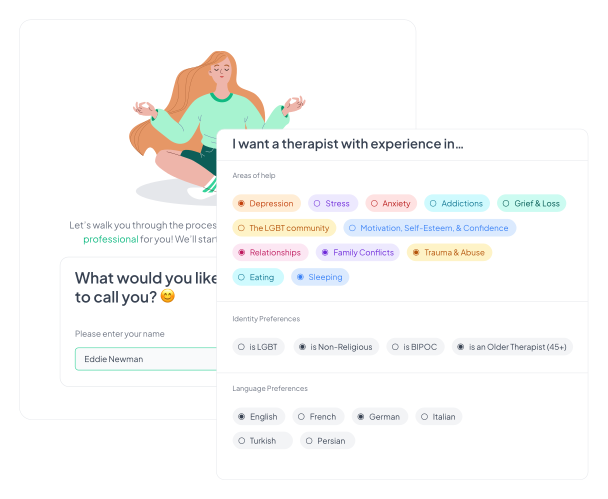
Create Your Free Account
Sign up in less than a minute. Your information is secure and confidential. Once registered, you can access all our mental health assessments from your personal dashboard.

Take the Grief Assessment
Complete the Traumatic Grief Inventory in about 10-15 minutes. Answer honestly about your experiences over the past month to get accurate results and personalized recommendations.
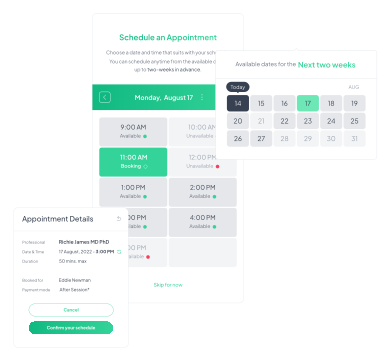
Get Support If Needed
Based on your results, connect with licensed grief counselors who specialize in bereavement and traumatic loss. Schedule appointments easily through your dashboard.
Ready to begin your healing journey?
You don't have to navigate grief alone. Create your free account today and take the grief assessment in 10-15 minutes. Compassionate support is available.
Sign Up FreeReady to begin your healing journey?
You don't have to navigate grief alone. Create your free account today and take the grief assessment in 10-15 minutes. Compassionate support is available.
Sign Up FreeFrequently asked questions
These answers offer a starting point for understanding grief assessments. For more detailed advice tailored to your individual circumstances, please consult with a grief counselor or wellness provider by making an appointment with one of our providers.


© 2026 MeTime Healing. All rights reserved.